

Within the scope of the “EU Partnership for Local Climate Action in Türkiye Project,” funded by the European Union, implemented by UNDP Türkiye, and with the Directorate of Climate Change as the final beneficiary, regional workshops organized online for all 12 NUTS-1 (Nomenclature of Territorial Units for Statistics-1) regions of Türkiye have been completed under the Regional Vulnerability and Risk Assessment activities.
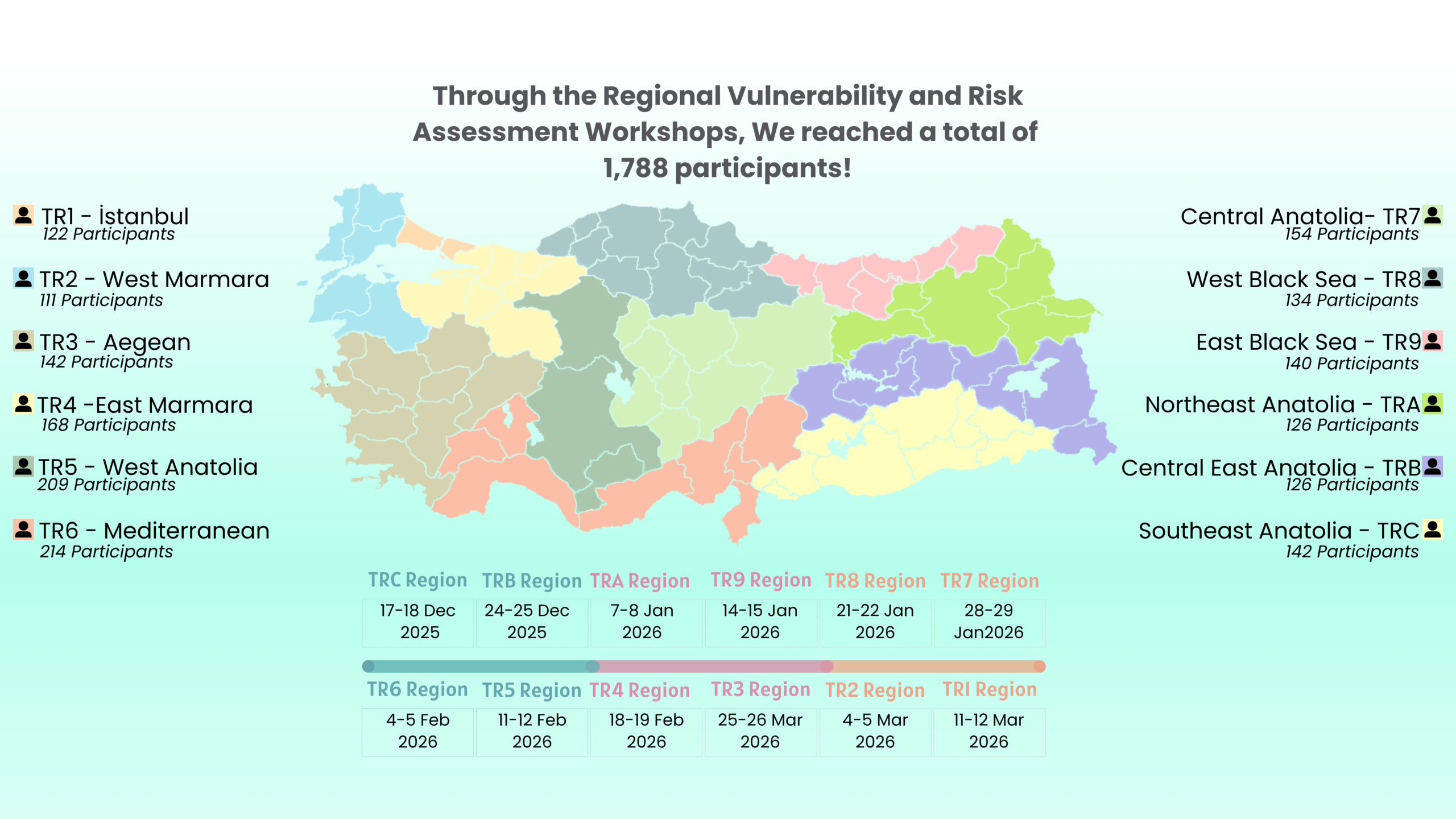
In this context:
Workshops were completed in two regions in December 2025:
- TRC Region (Southeastern Anatolia): 17–18 December 2025
- TRB Region (Central Eastern Anatolia): 24–25 December 2025
Workshops were completed in four regions in January 2026:
- TRA Region (Northeastern Anatolia): 7–8 January
- TR9 Region (Eastern Black Sea): 14–15 January
- TR8 Region (Western Black Sea): 21–22 January
- TR7 Region (Central Anatolia): 28–29 January
Workshops were completed in three regions in February 2026:
- TR6 Region (Mediterranean): 4–5 February 2026
- TR5 Region (Western Anatolia): 11–12 February 2026
- TR4 Region (Eastern Marmara): 18–19 February 2026
Workshops were completed in three regions in March 2026:
- TR2 Region (Western Marmara): 4–5 March 2026
- TR1 Region (Istanbul): 11–12 March 2026
- TR3 Region (Aegean): 25–26 March 2026
Thus, a total of 1,788 participants were reached across all 12 NUTS-1 regions within the scope of the workshops.
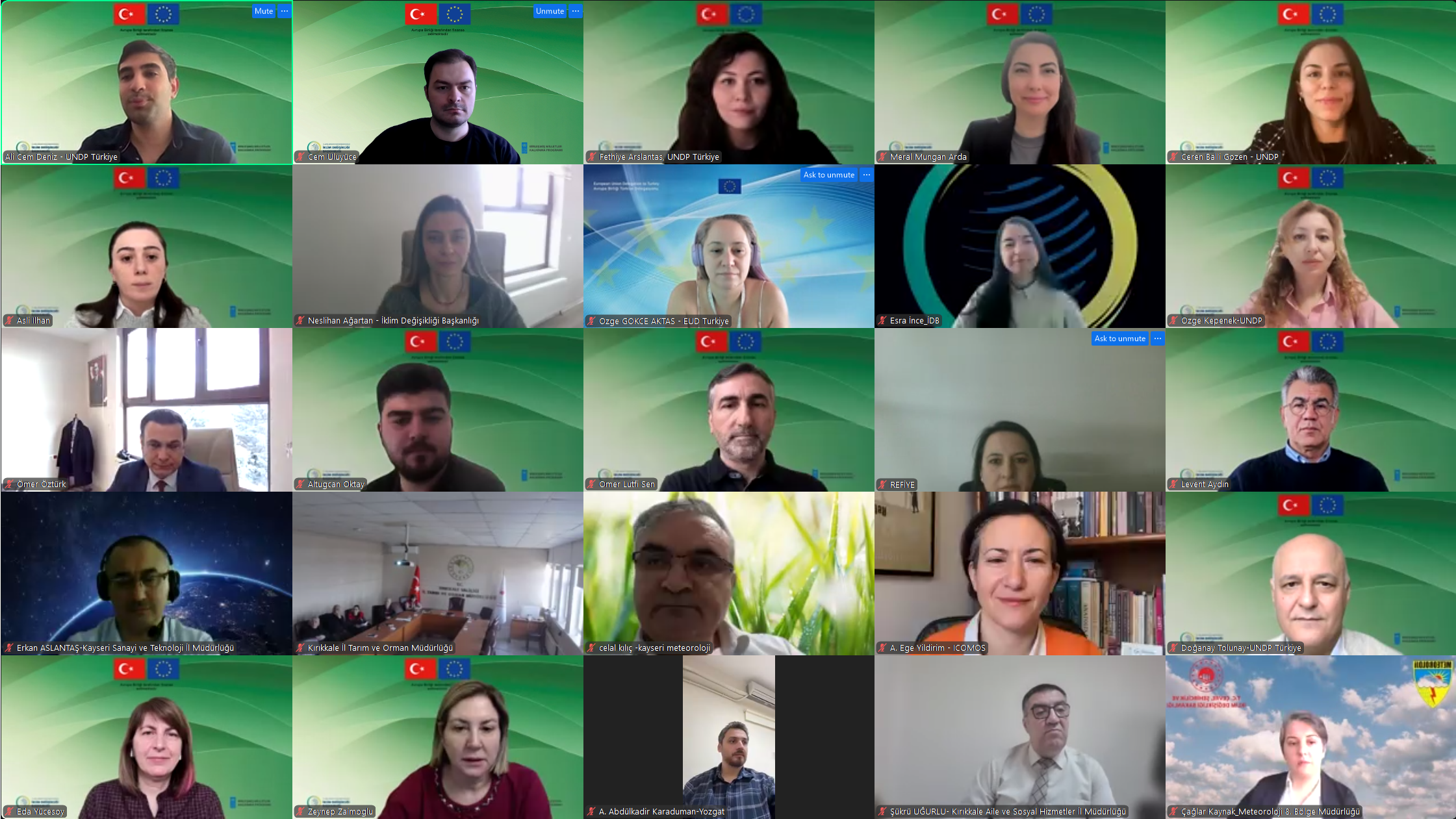
During the two-day workshops, the regional impacts of climate change were addressed in a comprehensive manner. In addition to priority sectors such as urban and rural settlements, water resources management, and health, sectors including transport and communication, tourism, biodiversity and ecosystems, energy, critical infrastructure, cultural heritage, industry, as well as agriculture and food security were also examined in detail, taking into account the specific conditions of each NUTS-1 region.
While climate projections, vulnerability and risk assessment methodology, and sectoral presentations were shared during the workshops, interactive and participatory evaluation sessions ensured that the knowledge, experience, and insights of local stakeholders were placed at the center of the process. Inputs obtained from participants provide guidance in identifying regional priorities and deepening the analyses.
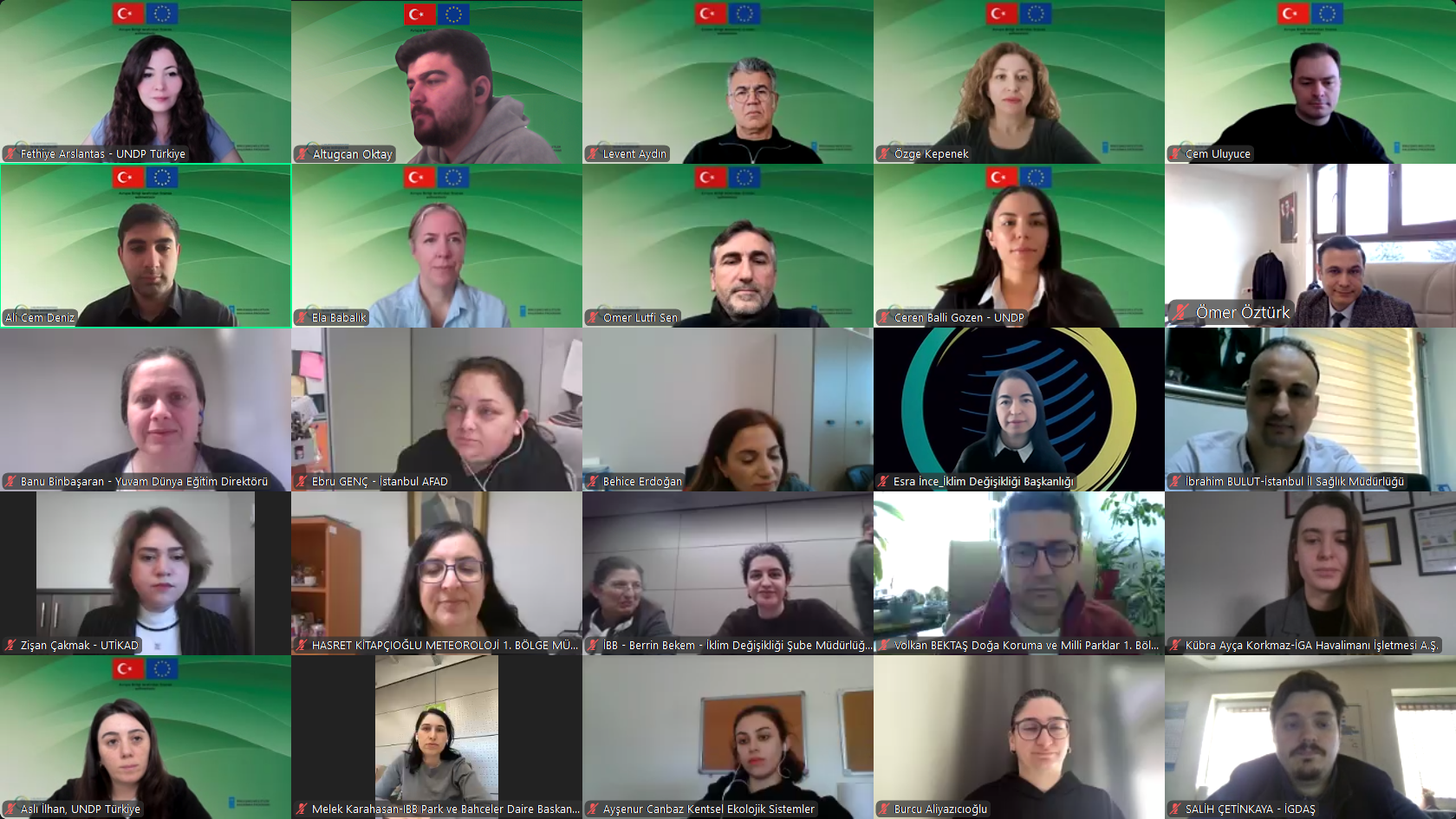
Through this approach, climate risk assessments for each NUTS-1 region are being developed using a scientific, holistic, and participatory methodology, while aiming to strengthen climate change adaptation capacity at the local and regional levels.