

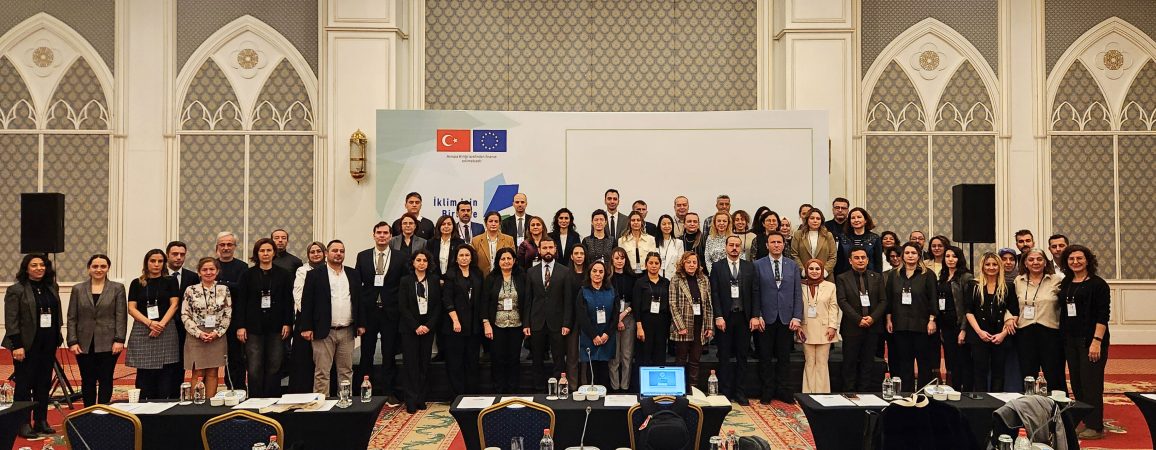
On 10-11 December 2024, a two-day workshop titled “Legislation on Local Climate Change Action Plans (LCCAP) Regulatory Impact Assessment” was held in Ankara. Organized under the EU Partnership for Local Climate Action in Türkiye, the workshop aimed to refine the methodology and scope of the Regulatory Impact Assessment (RIA) to support the development of legislation for the preparation, implementation, and monitoring of LCCAPs.
The opening remarks were delivered by Neslihan Ağartan, a Climate Change Expert from the Directorate of Climate Change, and Ceren Özkan, UNDP Türkiye Project Manager. The workshop continued with presentations and moderation by Rifat Ünal Sayman, a project expert. During the event, the results of the survey conducted to assess the current state of LCCAPs were shared with participants.
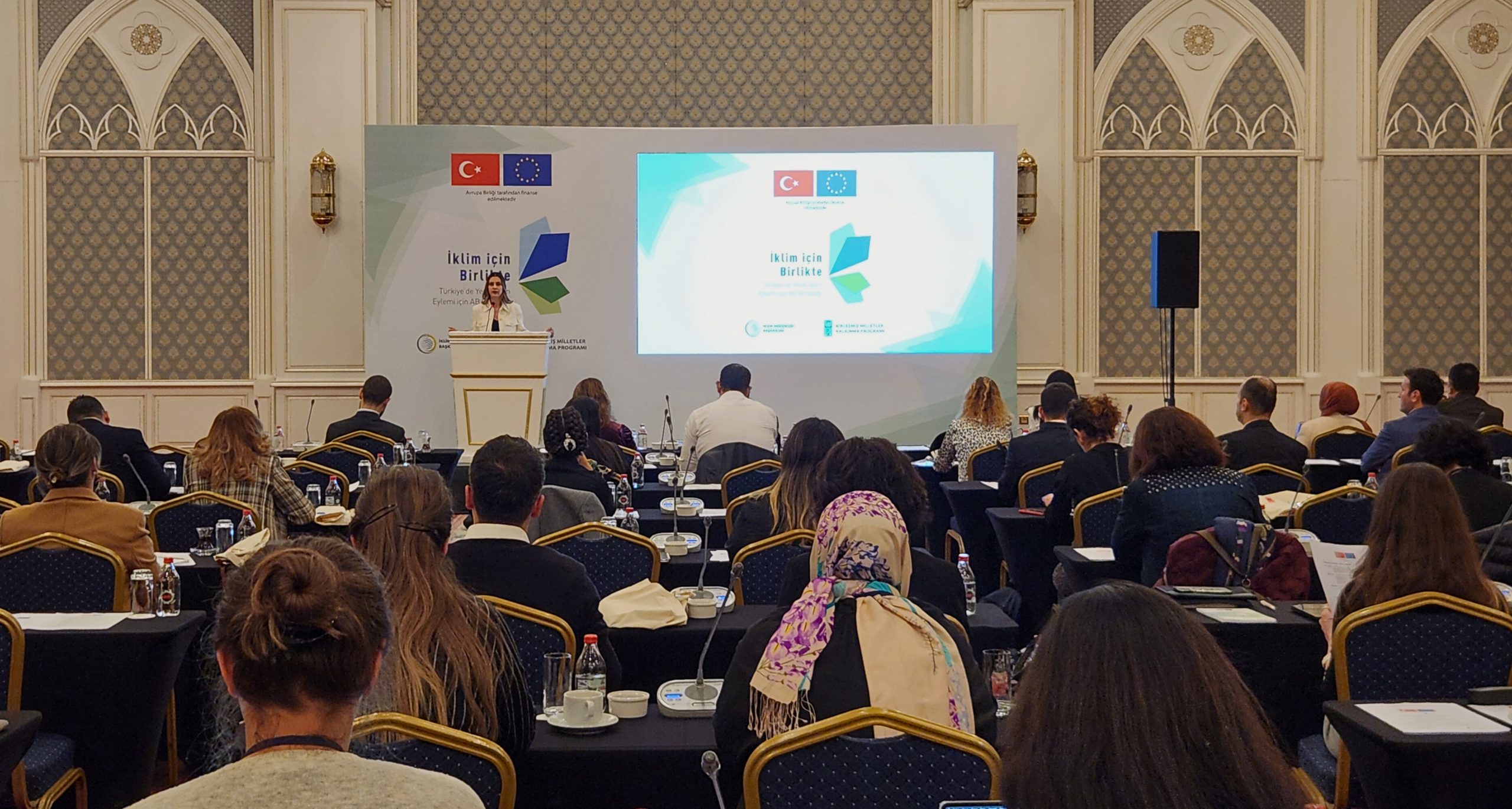
Participants included representatives from municipalities, government institutions, academia, and civil society. This diverse participation fostered an inclusive dialogue on local climate challenges. Participants also evaluated the current situation in their provinces and across Türkiye, discussing opportunities and barriers in implementing local climate actions.

Key Topics and Discussions
Through parallel sessions, participants explored eight critical policy areas related to LCCAP legislation:
- Mandatory Preparation of LCCAPs: Evaluating whether LCCAPs should be voluntary or mandatory.
- Authority and Responsibility for Preparing LCCAPs: Defining the roles and responsibilities of institutions in the preparation process.
- Provincial Coordination of LCCAPs: Reviewing mechanisms for effective coordination at the provincial level.
- Decision-Making for LCCAPs: Identifying key actors and processes for adopting plans.
- Monitoring and Reporting of LCCAP Implementation: Establishing systems to track and report progress.
- Preparation and Update Cycles of LCCAPs: Determining timelines for revisions.
- Preparation Timeline for LCCAPs: Discussing whether plans should be prepared simultaneously or phased.
- Publication of Emission Factors for LCCAPs: Assigning responsibility for providing necessary technical data.
These discussions provided valuable insights for creating a practical and effective legislative framework, enabling local actors to address climate-related challenges. Participants also shared their feedback through a survey completed at the end of the workshop.
The outcomes of the workshop will contribute to the development of a regulatory framework for enhancing local climate action, refining the RIA methodology, and aligning it with the needs of local authorities and other stakeholders.