
The “Awareness Raising Conference on Climate Action in Türkiye after COP30” organized within the scope of the EU Partnership for Local Climate Action in Türkiye Project, was held in Istanbul on 12 December 2025. The conference addressed the key themes emerging from global climate negotiations following COP30 and discussed how these processes are reflected in Türkiye’s national and local climate policies.
The conference opened with keynote speeches by Orhan Solak, Deputy Head of the Directorate of Climate Change; Monica Merino, United Nations Development Programme (UNDP) Türkiye Resident Representative; and Maria Luisa Wyganowski, representative of the Delegation of the European Union to Türkiye.
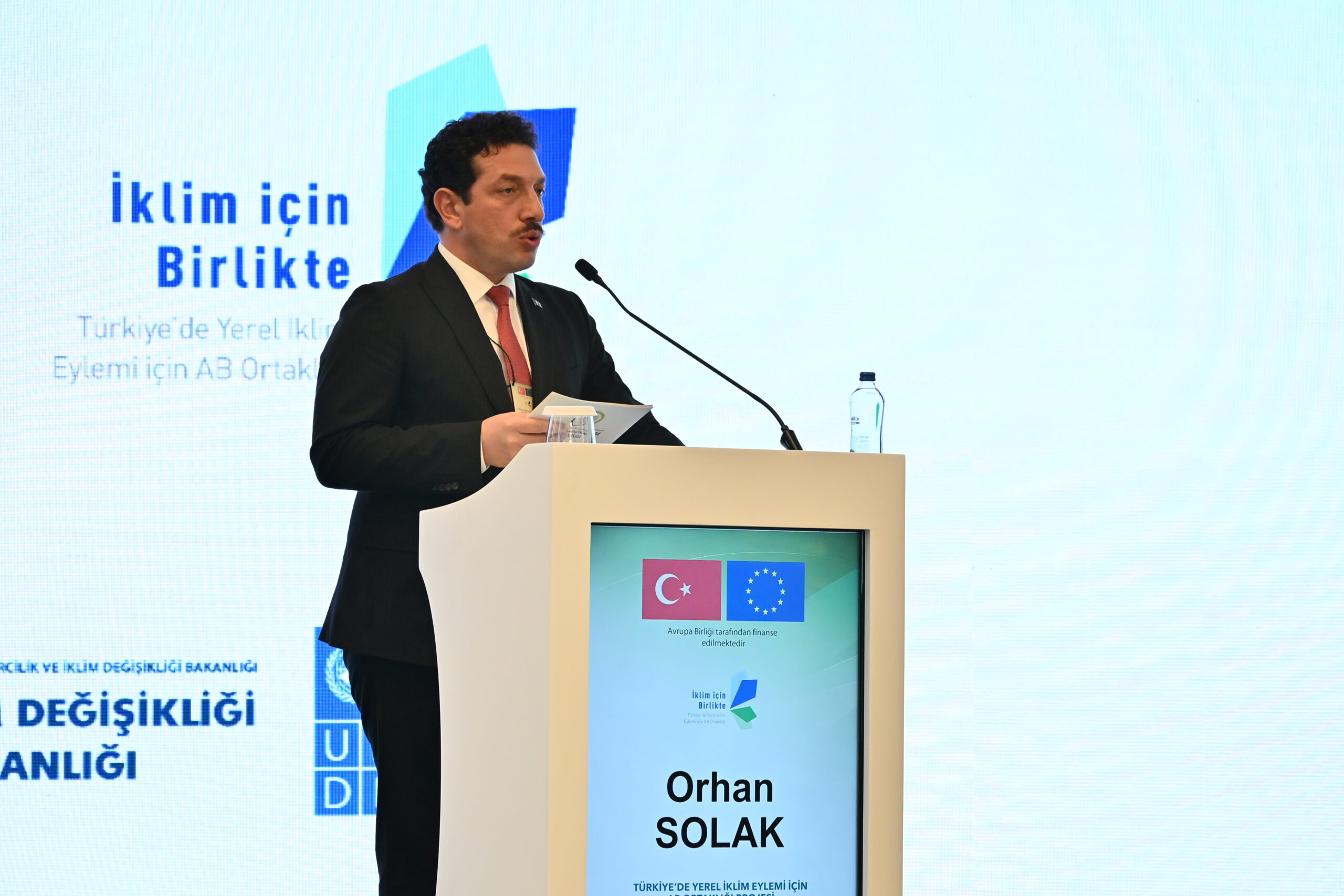
In his opening remarks, Orhan Solak emphasized that Türkiye has been significantly affected by climate change induced disasters, the frequency and severity of which have been increasing, and that climate change has become a tangible part of daily life. Solak noted that 2024 was the hottest year on record and stressed that the decisions adopted at COP30 must go beyond declarations of intent and be translated into measurable actions with concrete implementation on the ground. He also stated that COP31, to be hosted by Türkiye in Antalya, will mark a critical turning point in terms of addressing climate finance needs, Global Goal on Adaptation indicators, and the local implementation of socially inclusive and strong climate policies.
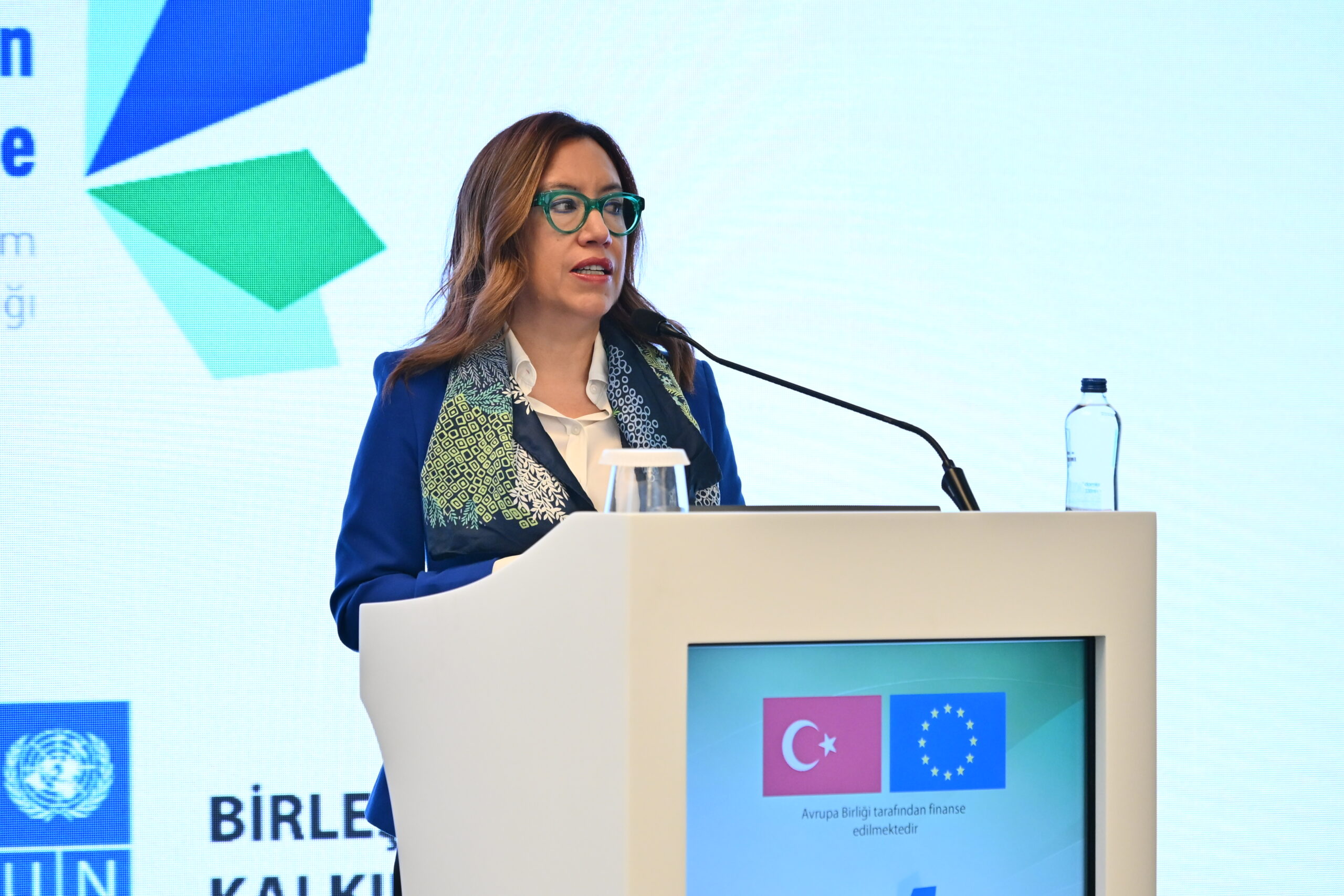
In her speech, UNDP Türkiye Resident Representative Monica Merino recalled that the Paris Agreement is entering its 10th year, underscoring that the coming period will be critical for transitioning from planning to implementation. Emphasizing that climate change is no longer a distant threat, Merino highlighted that its impacts such as heatwaves, droughts, wildfires, and biodiversity loss are directly affecting societies and economies. She noted that COP30 outcomes placed implementation, finance, and solidarity at the core of global climate action. Merino described Türkiye’s announcement of its updated Nationally Determined Contribution (NDC) at COP30 as an important step and stated that COP31 presents a major opportunity for Türkiye to strengthen its regional climate leadership. She reaffirmed UNDP’s commitment to continuing its support for strengthening local climate action, enhancing stakeholder capacities, and advancing climate action in Türkiye.
Maria Luisa Wyganowski, representative of the Delegation of the European Union to Türkiye, emphasized that the post-COP30 period marks the beginning of the transition “from ambition to implementation” on the road to COP31. Highlighting the European Union’s strong leadership under the European Green Deal, including its targets to reduce emissions by 55% by 2030 and to achieve climate neutrality by 2050, Wyganowski stated that the EU has provided more than EUR 1.5 billion in financial support to Türkiye to date through IPA funds in the areas of environment, climate, and sustainable infrastructure. She noted that key outcomes of COP30 included increased adaptation finance, the adoption of global adaptation indicators, the Gender Action Plan, and the Just Transition mechanism, and emphasized that the European Union stands ready to continue close cooperation with Türkiye throughout the COP31 process.

Following the opening session, Ali Cem Deniz, UNDP Türkiye Project Manager, delivered a presentation on the objectives, components, and achievements to date of the EU Partnership for Local Climate Action in Türkiye Project. Deniz underlined that the project aims to strengthen the capacity of local governments to combat climate change and emphasized the critical role of local climate action in achieving national climate targets. The presentation highlighted the contribution of Local Climate Change Action Plans (LCCAPs), capacity development efforts, and awareness-raising activities in scaling up climate action across Türkiye.

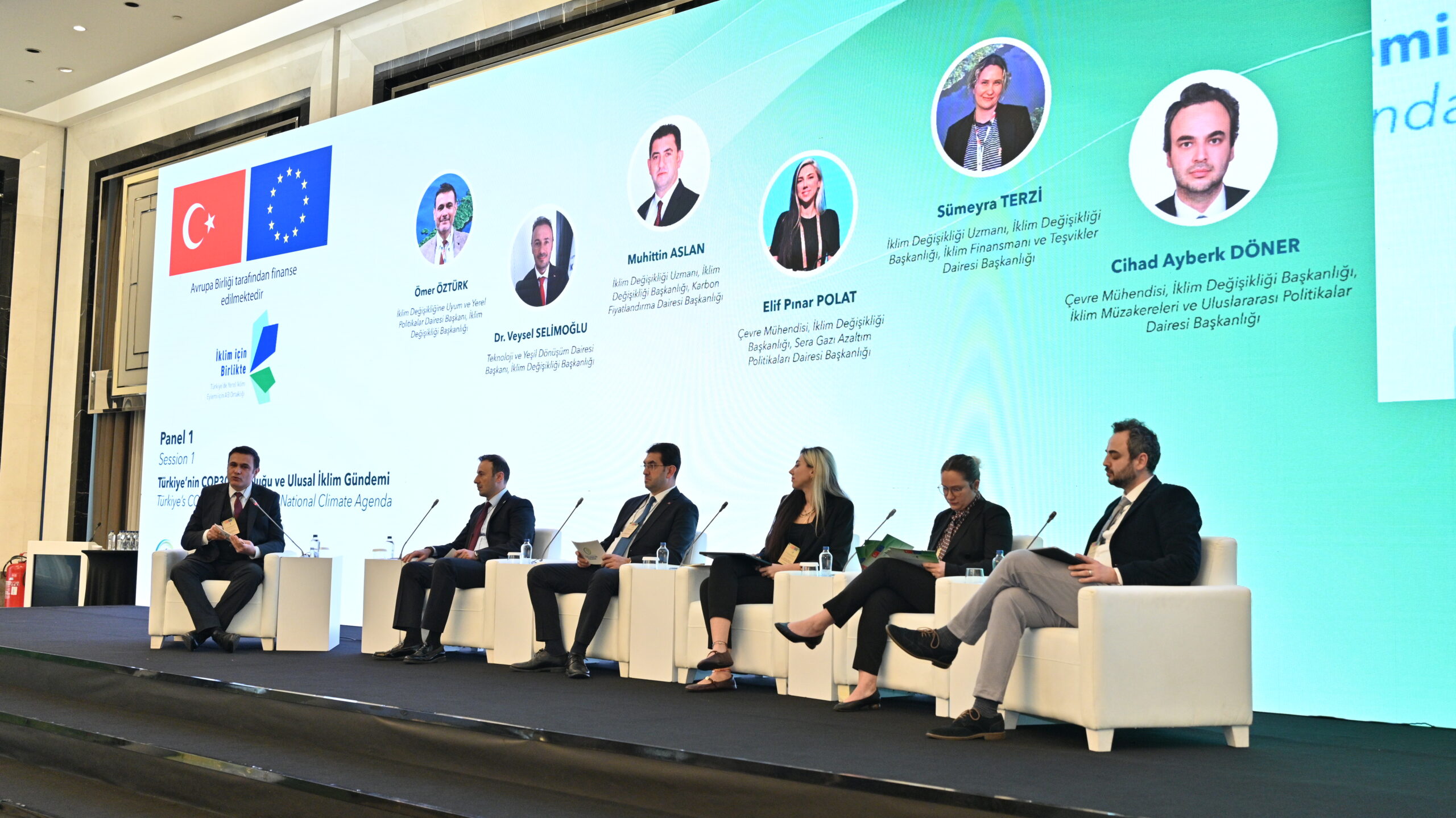
The first panel of the conference, titled “Türkiye’s COP30 Journey and the National Climate Agenda,” focused on the key negotiation topics discussed in Belém and their implications for Türkiye’s national climate policies, as well as the roadmap for the upcoming period. Members of the Directorate of Climate Change negotiation team emphasized that climate targets must be addressed through a holistic approach encompassing policy development, implementation, and monitoring to ensure tangible outcomes on the ground. The panel also highlighted that COP31, to be hosted by Türkiye in Antalya, will be organized through a participatory approach that leaves no one behind.
Following the lunch break, the panel titled “Financing the Green Transition – Post-COP30 Approaches of National and International Institutions,” was moderated by Mürsel Akbulut, Head of the Climate Finance and Incentives Department of the Directorate of Climate Change. Representatives from the Delegation of the European Union to Türkiye, the Investment and Finance Office of the Presidency of the Republic of Türkiye, İLBANK, the Asian Development Bank, and the European Bank for Reconstruction and Development (EBRD) discussed the importance of climate finance, existing and potential financing mechanisms to support the green transition, and the respective roles of the public and private sectors. The panel underscored that access to finance is a determining factor in accelerating climate action and highlighted the importance of capacity development to enable local governments to effectively benefit from available financial resources.

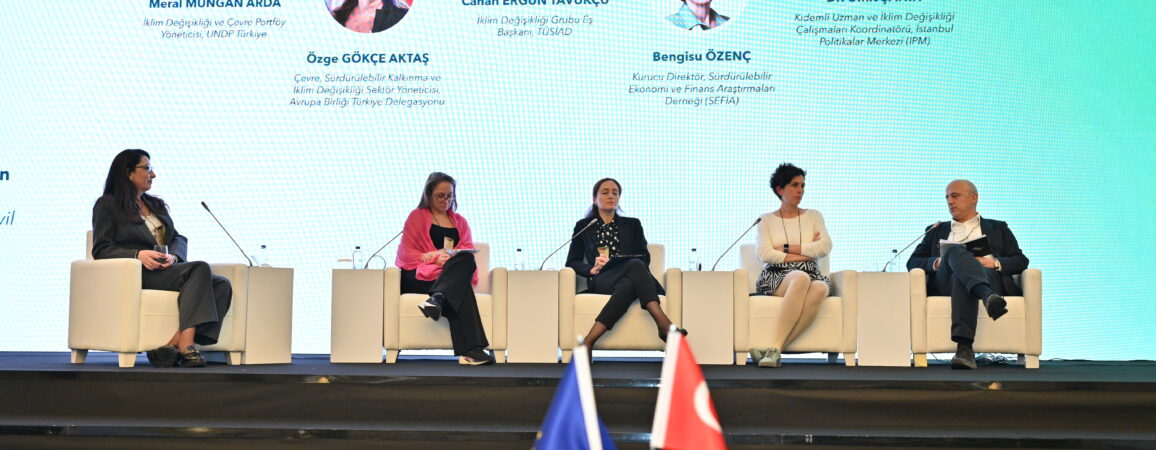
The final panel of the day, “Climate Action for Society – The Role of Civil Society and International Organizations,” was moderated by Meral Mungan Arda, UNDP Türkiye Climate Change and Environment Portfolio Manager. Panelists from the Delegation of the European Union to Türkiye, TÜSİAD, the Sustainable Economy and Finance Research Association (SEFİA), and the Istanbul Policy Center (IPC) emphasized that strengthening climate action requires an inclusive and participatory approach that engages all segments of society. The panel highlighted that the active participation of youth, women, and vulnerable groups is critical to the success of climate policies.

The event aimed to enhance stakeholder knowledge exchange, promote the dissemination of good practices, and increase participants awareness of climate negotiations within the scope of the EU Partnership for Local Climate Action in Türkiye Project. The conference provided an important platform for strengthening climate action awareness in Türkiye in the post-COP30 period.
 Click here to watch the full recording of the event.